
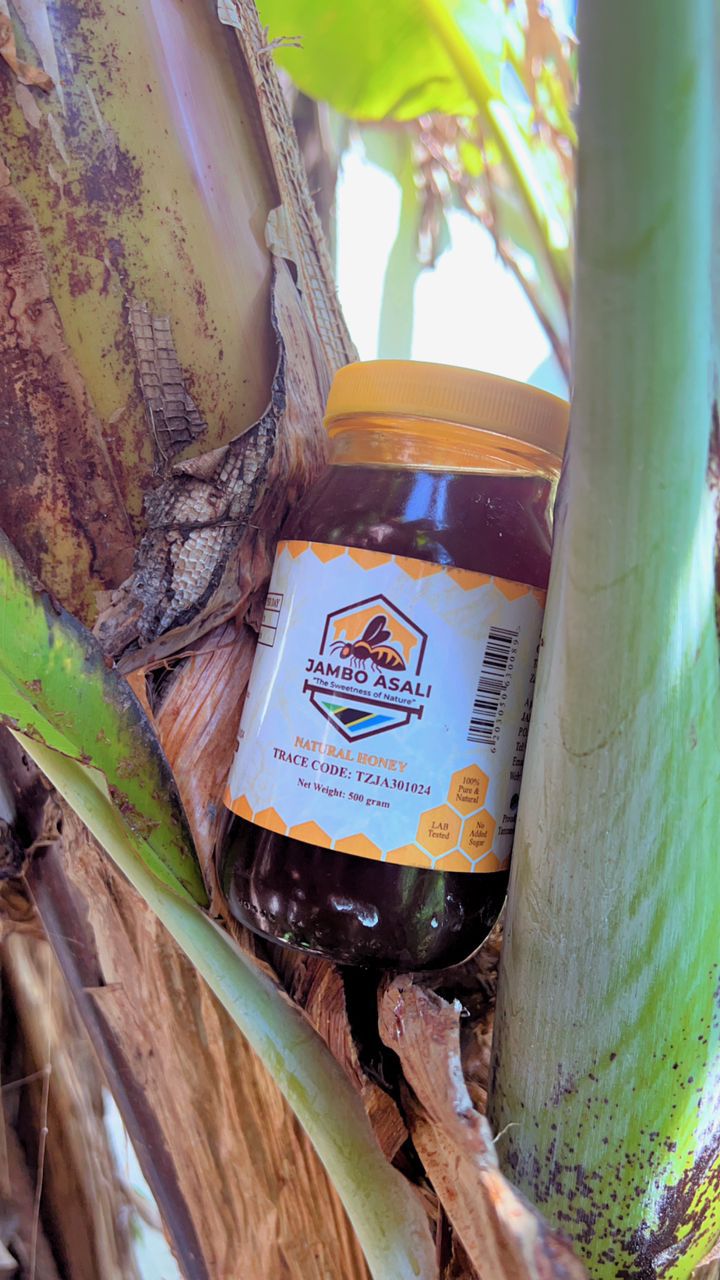
Which brand of honey is 100% Pure and Natural? this is possible question most of shoppers ask, they’re really asking two things: where did the honey come from, and what happened to it after the bees made it? In Tanzania, a country blessed with diverse floral ecosystems from miombo woodlands to coastal blossoms there are many exceptional honeys. One brand that’s increasingly known for promoting authentic, minimally-processed Tanzanian honey is Jambo Asali from Tanzania International Bee Co. Ltd. Below I explain what “100% pure and natural” really means, how Tanzanian honeys (especially Miombo honey) meet those standards, and why Jambo Asali is worth considering.
What “100% pure and natural” really means
“Pure” and “natural” are terms often used in marketing, but here’s what a careful buyer should expect:
- No added sugars, syrups, or fillers — nothing mixed into the jar after extraction.
- Minimal processing — filtered only to remove debris but not heated or ultrafiltered in ways that change honey’s chemistry.
- Traceable origin — clear information about where the honey was collected (region, floral source) and how it was handled.
- Laboratory evidence (optional but best practice) — tests for moisture, HMF (hydroxymethylfurfural, an indicator of overheating or old honey), pollen analysis (for floral origin), and absence of contaminants.
A honey labeled “100% pure and natural” should be verifiable by at least some of those checks.
Why Tanzanian honey stands out — the case for Miombo honey
Tanzania’s varied biomes produce distinct honeys. One of the most prized is Miombo honey, harvested from the miombo woodland belt that spans large parts of southern and eastern Africa. Miombo honey is appreciated for:
- Unique floral profile — nectar from miombo tree species gives honey characteristic flavor and aroma.
- Low agricultural contamination — in many miombo areas beekeeping is done in remote or less intensively farmed landscapes.
- Traditional beekeeping practices — many beekeepers use low-intervention methods that favor purity.
These attributes make properly handled Miombo honey a strong candidate for being genuinely “pure and natural.”
Which brand of honey is 100% Pure and Natural? Why Jambo Asali is standing out ?
Jambo Asali is the consumer brand of Tanzania International Bee Co. Ltd. The company and brand focus on producing and promoting authentic Tanzanian honey, with emphasis on natural forest (Miombo) origins. What makes Jambo Asali notable:
- Source-focused: Jambo Asali highlights honey harvested from natural floral sources such as Miombo woodlands — not blended industrial honeys.
- Processing and traceability: The company operates processing capacity (including the Kibondo Honey Processing Center), enabling controlled extraction, basic filtration, and packaging under known hygienic conditions rather than selling raw, untracked product from multiple unknown sources.
- Export orientation: Jambo Asali markets Tanzanian honey internationally, which encourages adherence to higher quality and traceability standards demanded by foreign buyers.
Taken together, these points show Jambo Asali positioning itself as a brand that prioritizes natural, traceable honey — key ingredients for a “100% pure and natural” claim.
How to verify purity (tips for buyers)
No matter the brand, here are practical checks to help you confirm honey’s purity:
- Ask for origin details: Region, floral source (e.g., Miombo), and harvest date. Reputable brands provide this.
- Request lab reports: Look for moisture content (ideally below 20%), HMF (low values suggest no overheating), and pollen analysis (to confirm floral source).
- Packaging & labeling: Check for batch numbers, processing center name (e.g., Kibondo processing), and exporter/importer information.
- Taste & texture: Pure natural honey varies by floral source — it may crystallize naturally, and flavor will reflect its origin. Uniformly clear, syrupy texture can be a red flag for heating or adulteration.
- Third-party certifications: Where available, quality or organic certifications increase confidence.
Limitations and honesty in marketing
A brand can position itself as 100% pure and natural, but absolute claims require verifiable evidence. Consumers and buyers should ask for documentation. Responsible brands (including those exporting) are typically willing to share test results and traceability data.
Conclusion
If your question is “which honey is 100% pure and natural?” the honest answer is: the honey that comes with traceable origin, transparent processing, and supporting lab evidence. In Tanzania, Miombo honey is among the best floral sources for naturally pure honey, and Jambo Asali (Tanzania International Bee Co. Ltd) is a strong example of a brand that focuses on natural forest honey, controlled processing, and international-quality packaging. For the highest confidence, request the floral origin, batch information, and lab analysis from the seller when those are present, you’re very close to true “100% pure and natural” honey.

