
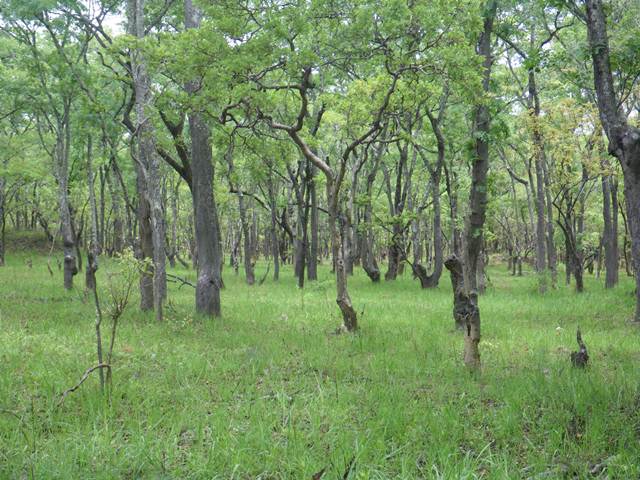
1. What is Miombo Forest?
The Miombo forest refers to a vast tropical dry forest ecosystem that spans across several countries in southern and central Africa, including Tanzania, Zambia, Angola, Mozambique, Malawi, Zimbabwe, and the Democratic Republic of the Congo. It covers over 2.7 million km², making it one of the largest continuous dry forests in the world.
Key Characteristics of Miombo Forest:
- Dominated by tree species in the legume family Fabaceae, particularly the subfamily Caesalpinioideae.
- The primary general are:
- Brachystegia spp.
- Julbernardia spp.
- Isoberlinia spp.
- Rich in biodiversity: hosts more than 8,500 plant species, with over 54% endemism.
- Seasonal flowering and fruiting cycles that support rich pollinator networks, including wild and domesticated bees.
2. What is Miombo Forest Flowers Honey?
Miombo honey is a type of monofloral or polyfloral honey produced by Apis mellifera bees that forage on the nectar of flowering plants and trees within the Miombo ecosystem, especially during the peak flowering season.
Main Floral Sources for Honey:
- Brachystegia spiciformis
- Julbernardia globiflora
- Isoberlinia angolensis
- Combretum spp., Albizia spp., Terminalia spp.
The nectar from these trees contributes to the honey’s unique taste, color, and medicinal properties.

3. Biological Compounds in Miombo Trees (Nectar Sources)
Miombo tree species are rich in phytochemicals known for health benefits. These compounds are passed into the nectar and, subsequently, into the honey.
Notable Bioactive Compounds:
| Tree Species | Key Phytochemicals | Properties |
| Brachystegia spp. | Flavonoids, tannins, alkaloids | Antioxidant, anti-inflammatory |
| Julbernardia spp. | Saponins, phenolics | Antibacterial, immune-stimulating |
| Isoberlinia spp. | Terpenoids, phenolic acids | Hepatoprotective, antimicrobial |
| Combretum spp. | Ellagic acid, quercetin, catechins | Antiviral, wound-healing |
| Terminalia spp. | Gallic acid, flavonoids, ellagitannins | Anti-cancer, liver detoxifying |
4. Chemical Composition of Miombo Honey
Miombo honey’s therapeutic qualities stem from its unique chemical composition, influenced by the diverse flora of the forest.
Main Components:
- Sugars: Fructose (38-41%), Glucose (30-35%)
- Phenolic compounds: Gallic acid, caffeic acid, p-coumaric acid
- Flavonoids: Quercetin, apigenin, kaempferol
- Minerals: Potassium, Calcium, Magnesium, Iron, Zinc
- Enzymes: Glucose oxidase, catalase
- Antioxidants: High levels of total phenolic content (TPC) and total flavonoid content (TFC)
5. Medicinal and Therapeutic Benefits of Miombo Honey
Miombo honey is traditionally and scientifically recognized for its health-enhancing and healing properties.
5.1 Antibacterial and Antimicrobial Activity
- Effective against Staphylococcus aureus, E. coli, Pseudomonas aeruginosa, and Candida albicans.
- Natural hydrogen peroxide activity and non-peroxide bioactivity due to polyphenols.
5.2 Anti-inflammatory Properties
- Reduces inflammation in skin wounds, sore throats, and internal infections.
- Used in traditional medicine for respiratory tract infections, tonsillitis, and gastritis.
5.3 Antioxidant Power
- Neutralizes free radicals, reduces oxidative stress.
- Supports chronic disease prevention: cardiovascular diseases, diabetes, and neurodegenerative disorders.
5.4 Wound Healing and Skin Health
- Promotes epithelial regeneration and tissue repair.
- Used in burn treatment, ulcers, and surgical wounds.
5.5 Immuno-modulatory Effects
- Boosts immune system activity due to flavonoids and other bioactive substances.
6. Traditional Uses of Miombo Honey in Local Communities
In Tanzania, Zambia, and Angola:
- Used to treat coughs, digestive issues, skin infections, and eye infections.
- Given to pregnant women and children as a nutritional tonic.
- Used in rituals and food preservation due to its antibacterial qualities.
7. Export Potential and Certification
Miombo honey, especially from Tanzania, has:
- High international demand due to its purity and medicinal value.
- Certification potential: Organic, Fair Trade, HACCP, Geographical Indication (GI).
- Target markets: EU, China, Middle East, USA.
8. Research and Scientific Support
- Studies by University of Zambia, Sokoine University of Agriculture (Tanzania), and CIRAD (France) confirm Miombo honey’s high antioxidant and antibacterial properties.
- Comparative research shows Miombo honey rivals or exceeds Manuka honey in phenolic content and medicinal value.
10. Conclusion
Miombo forest flowers honey is a rare and valuable natural product with immense ecological, medicinal, and commercial value. It represents a unique fusion of biodiversity and traditional knowledge, with scientifically proven potential to support human health, rural livelihoods, and forest conservation.

