
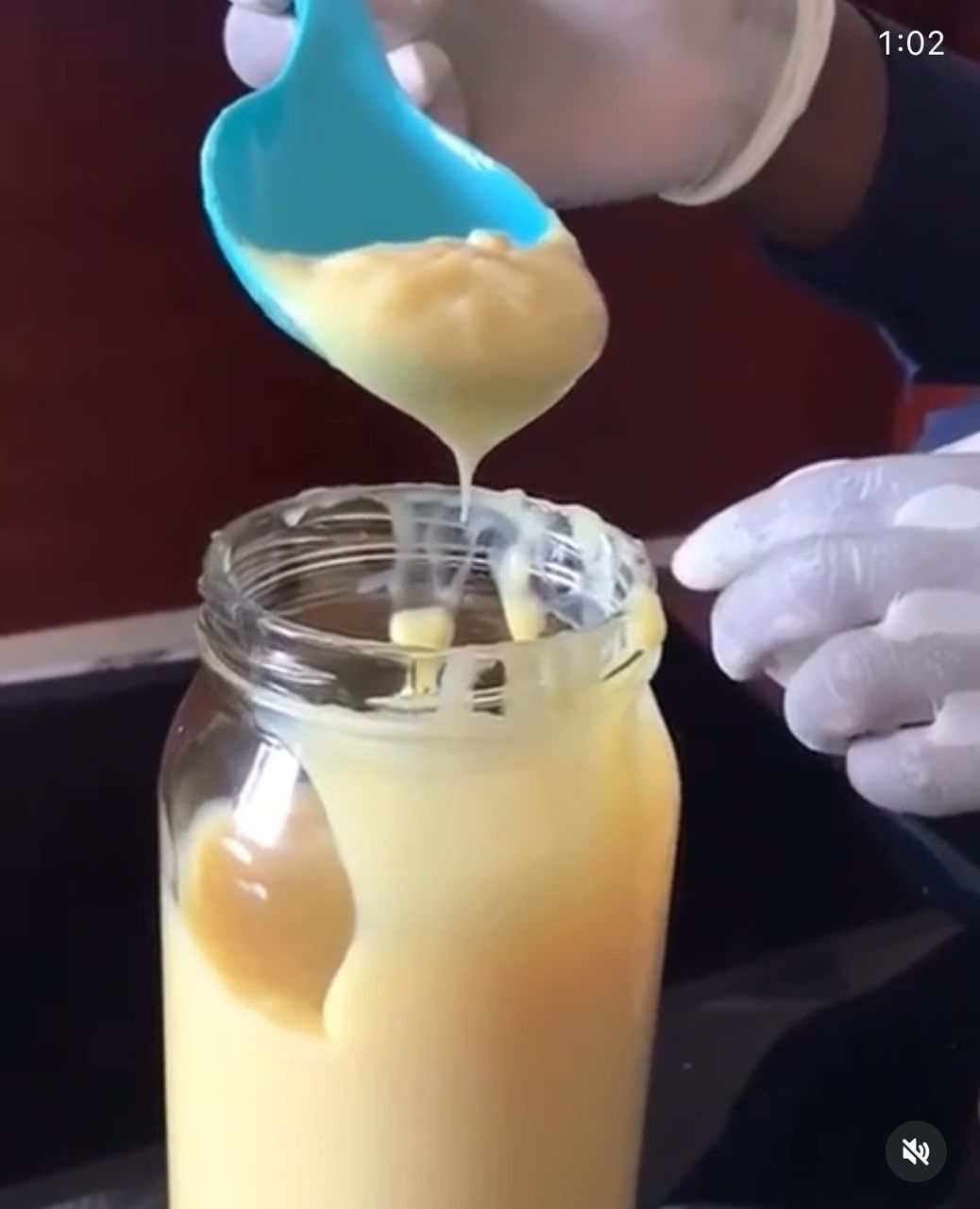
Fresh Royal jelly is a creamy, milky secretion produced by the hypopharyngeal glands of young nurse honeybees (Apis mellifera). It serves as the exclusive food for the queen bee throughout her life, enabling her to live up to 20 times longer than worker bees and to produce up to 2,000 eggs per day. These extraordinary effects have driven centuries of interest in royal jelly’s potential health benefits in humans. Today, modern science is uncovering the mechanisms behind its antioxidant, anti-inflammatory, anti-aging, antimicrobial, and wound-healing properties.

1. Composition of Royal Jelly: The Bioactive Compounds
Royal jelly is composed of:
- Proteins (12-15%) – including Major Royal Jelly Proteins (MRJPs) with biological activity.
- Carbohydrates (10-12%) – mainly fructose and glucose.
- Lipids (5-7%) – especially 10-Hydroxy-2-decenoic acid (10-HDA), a unique fatty acid with medicinal activity.
- Vitamins – B-complex vitamins, especially pantothenic acid (B5) and niacin (B3).
- Minerals – calcium, potassium, magnesium, zinc.
- Phenolic compounds – with antioxidant potential.
2. How Royal Jelly Works in the Human Body: Scientific Mechanisms
- Immune System Modulation:
- Mechanism: 10-HDA and MRJPs, particularly MRJP1, have been shown to possess immunomodulatory properties. They can stimulate the production and activity of immune cells like macrophages and lymphocytes, which are crucial for fighting off pathogens. Royal jelly also exhibits antimicrobial activity against various bacteria and fungi, providing a direct protective effect.
- Scientific Evidence: Studies have demonstrated royal jelly’s ability to enhance antibody production and T-cell proliferation. Research published in the Journal of Medicinal Food has highlighted its potential in enhancing host defense mechanisms and its anti-inflammatory effects, which indirectly support immune function by reducing chronic inflammation that can suppress immunity.
- Anti-inflammatory and Antioxidant Effects:
- Mechanism: Royal jelly contains compounds that scavenge free radicals, thus reducing oxidative stress, a major contributor to cellular damage and chronic diseases. Its anti-inflammatory properties are linked to its ability to inhibit pro-inflammatory cytokines and enzymes, alleviating inflammation throughout the body.
- Scientific Evidence: Multiple in vitro and in vivo studies, including those published in Oxidative Medicine and Cellular Longevity, have confirmed royal jelly’s potent antioxidant activity due to its phenolic compounds and enzymes. Its anti-inflammatory effects have been observed in models of inflammatory bowel disease and arthritis, showing reductions in inflammatory markers.
- Hormonal Balance and Reproductive Health:
- Mechanism: While the exact mechanisms are still under investigation, royal jelly is believed to influence hormone regulation, particularly in women. It contains phytoestrogens, plant-derived compounds that can mimic or modulate estrogen activity in the body, potentially alleviating menopausal symptoms and supporting reproductive health.
- Scientific Evidence: Clinical trials, some published in Climacteric, have shown royal jelly to be effective in reducing menopausal symptoms like hot flashes, mood swings, and vaginal dryness. There is also anecdotal evidence and some preliminary research suggesting its potential to improve fertility in both men and women by enhancing sperm quality and ovarian function, though more robust human studies are needed in this area.
- Neuroprotective and Cognitive Enhancement:
- Mechanism: The presence of acetylcholine, alongside its antioxidant and anti-inflammatory properties, contributes to royal jelly’s neuroprotective effects. It may help protect brain cells from damage, improve neurotransmission, and promote neuronal regeneration.
- Scientific Evidence: Animal studies, as reported in journals like Neuroscience Letters, have shown royal jelly’s ability to improve memory and learning, reduce anxiety, and protect against neurodegenerative conditions by mitigating oxidative stress and inflammation in the brain. Its potential role in supporting nerve growth factor (NGF) production is also being explored.
- Cardiovascular Health:
- Mechanism: Royal jelly can contribute to cardiovascular health by lowering cholesterol levels, regulating blood pressure, and improving lipid profiles. Its antioxidant properties also protect blood vessels from damage.
- Scientific Evidence: Research in the Journal of Nutritional Science and Vitaminology has indicated that royal jelly consumption can lead to a reduction in total cholesterol and LDL (“bad”) cholesterol, while increasing HDL (“good”) cholesterol. Some studies also suggest a modest hypotensive effect, contributing to blood pressure regulation.
- Skin Health and Anti-aging:
- Mechanism: By combating oxidative stress, reducing inflammation, and promoting collagen production, royal jelly contributes to healthier, more youthful skin. It aids in skin repair and regeneration.
- Scientific Evidence: Topically and orally, royal jelly has been shown to improve skin elasticity, reduce wrinkles, and accelerate wound healing. Its ability to stimulate collagen synthesis has been demonstrated in cell culture studies, supporting its use in anti-aging formulations.
- Blood Sugar Regulation:
- Mechanism: While not a primary treatment for diabetes, some studies suggest royal jelly may help regulate blood sugar levels by improving insulin sensitivity and reducing oxidative stress associated with diabetes.
- Scientific Evidence: Preliminary research, including some studies on diabetic animal models, indicates that royal jelly may help lower fasting blood glucose and improve glucose tolerance. More human clinical trials are needed to confirm these effects.
3. Internal Consumption: Dosage and Safety
How to Consume Royal Jelly Orally
- Dosage: 300–500 mg/day of fresh royal jelly, or 1–2 tsp when mixed with honey.
- Timing: Take on an empty stomach in the morning.
- Method: You can:
- Swallow it directly (fresh or in capsule form)
- Mix with warm water and lemon
- Blend into smoothies
- Combine with honey for a sweet immune-boosting tonic
⚠️ Note: Individuals allergic to bee products, asthma patients, or those with a history of anaphylaxis should consult a doctor before use.
4. Scientific Evidence at a Glance
| Health Benefit | Active Component | Scientific Evidence (Journal) |
| Anti-inflammatory | 10-HDA | Biochem Biophys Res Commun, 2004 |
| Antioxidant | Phenolics, MRJPs | Food Chem, 2004 |
| Skin regeneration | Proteins, peptides | Biosci Biotechnol Biochem, 1990 |
| Hormonal regulation | Phytoestrogens | Food Chem Toxicol, 2005 |
| Cognitive improvement | Royalactin | Nature, 2011 |

5. Storage and Quality Considerations
Fresh royal jelly is highly perishable and should be:
- Stored at 0–20°C (refrigerated or frozen)
- Protected from light and air exposure
- Used within 3–6 months for maximum potency
Note: Honey preserves royal jelly naturally, making it a practical solution for rural or export markets. It may stay safe for long period if kept with honey, no need of refrigeration
Conclusion
Fresh royal jelly is one of nature’s most powerful nutraceuticals, offering a vast spectrum of medicinal benefits from internal health to external skin regeneration. When consumed or applied properly, especially when combined with raw honey, it acts as a natural elixir for immunity, skin health, hormone balance, and longevity. you may find fresh royal jelly from Tanzania International bee co ltd apiaries.
Whether you are a wellness enthusiast or part of a community seeking natural health solutions, royal jelly stands as a scientifically validated and time honored remedy worth exploring.

